
A singular chronoway: June 11, 2011
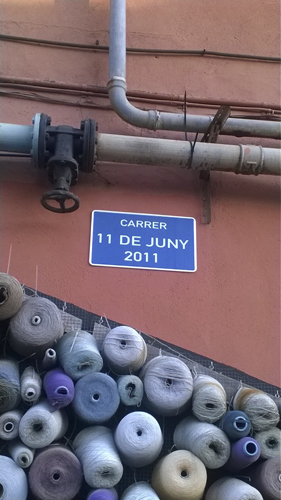
In the Bordeta neighborhood there once stood a textile factory called Can Batlló, which operated from 1878 to 1960 before going bankrupt due to the crisis in the sector
Later, more than 200 small businesses settled there. Urban plans in 1976 and 2006 required their relocation to make way for housing, facilities and green areas, but the site remained partly abandoned amid long disputes between residents, the administration and private owners (including a real estate company linked to the Batlló family), who intended to develop housing alongside the required public facilities. The situation became stalled for years.
Residents from the neighborhood and surrounding areas (Sants, Hostafrancs, Badal and Font de la Guatlla) demanded that the entire site be devoted to public facilities, social housing, green areas, urban gardens and production cooperatives. They organized under the platform Can Batlló és per al barri (“Can Batlló belongs to the neighborhood.”)
They announced they would occupy the buildings if the City Council had not begun transformation works by June 11, 2011. This led to the transfer of a group of buildings known as Bloc 11, allowing residents to enter on that date.
Bloc 11 became a community-managed space, where a pedestrian street was opened and named “June 11, 2011 Street.”
This name is not part of Barcelona’s official street register, but rather a community-created designation within the site. The plaque is therefore (or was) symbolic and activist in nature. The name remains in use within Can Batlló today.